
Experience the Passion: Everything you need to know to visit Seville's Holy Week in 2026
Traditions06/03/2026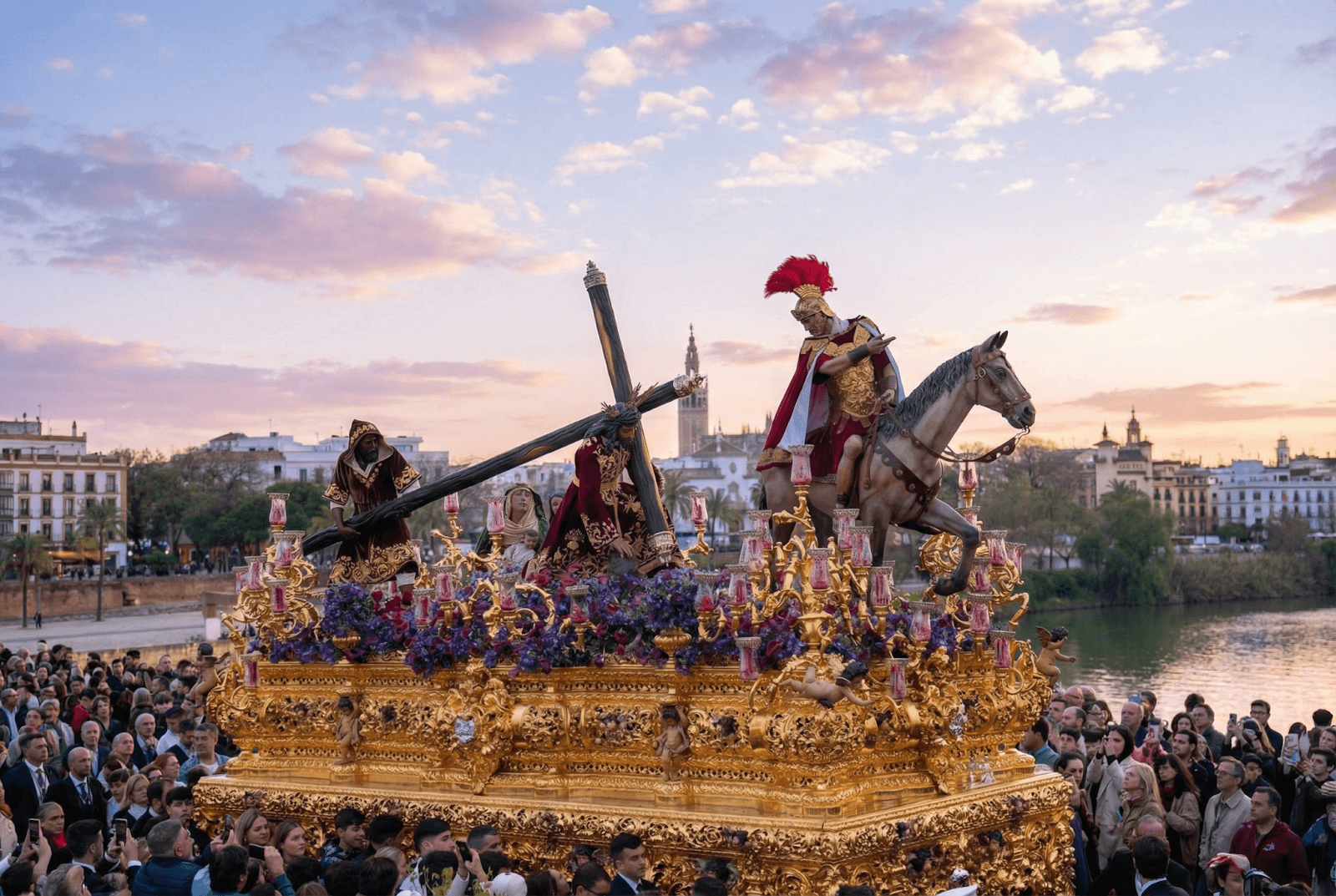
Holy Week in Seville in 2026 promises to be an unforgettable experience. This year, from March 29 to April 5, 2026 , the city will transform into the stage for one of the world's most impressive religious celebrations. This comprehensive guide will help you plan your visit, learn about the must-see processions, and discover the best places to stay in the heart of Seville.
1. Key Dates and Their Meaning in Holy Week 2026
Holy Week 2026 in Seville runs from March 29 (Palm Sunday) to April 5 (Easter Sunday). Each day has a special meaning:
Palm Sunday (March 29): Commemorates Jesus' triumphant entry into Jerusalem. The most prominent processions include La Borriquita and La Paz.
Holy Monday (March 30): Highlights include the Christ of the Good Death and Our Lady of Help.
Holy Tuesday (March 31): The Lord of Seville and Mary Most Holy of the Ancient process through the historic center.
Holy Wednesday (April 1): The processions of Las Penas and El Baratillo mark this day of reflection.
Holy Thursday (April 2): The Last Supper is commemorated, with brotherhoods such as El Silencio and La Carretería.
Good Friday (April 3): The most dramatic and emotional day, with the Gran Poder, La Macarena and the Esperanza de Triana.
Holy Saturday (April 4): Day of reflection with the procession of the Holy Burial.
Easter Sunday (April 5): Joyful celebration of the Risen Christ.
The Macarena
Seville's most popular procession departs from the Basilica of La Macarena on Good Friday. The Virgin of Hope Macarena, with her sorrowful expression and golden crown, travels through the streets accompanied by thousands of the faithful. Practical tip: Arrive at the Basilica early (before 11:00 PM) to secure a good spot.
The Great Power
The Lord of Great Power is the most venerated image in Seville. Its Good Friday procession in the early hours of the morning (known as "La Madrugá") is a moment of intense religious emotion. The departure from the Basilica of Great Power near midnight is one of the most anticipated moments.
The Hope of Triana
The passage of the Virgin of Hope across the Triana Bridge is one of the most moving and photographed moments. The procession departs on Good Friday and crosses the Guadalquivir River on its return to its original neighborhood, creating a unique atmosphere.
The Gypsies
The Brotherhood of the Gypsies holds its procession on Holy Thursday with the Christ of the Gypsies and the Virgin of Sorrows. It is known for its flamenco fervor and the massive participation of the Sevillian Gypsy community.
The Puppy
The Christ of the Expiration, known as "El Cachorro," is the work of sculptor Francisco Antonio Ruiz Gijón. His agony on the cross represents one of the most dramatic moments of the Passion.
3. Where to Stay During Holy Week: The Best Neighborhoods
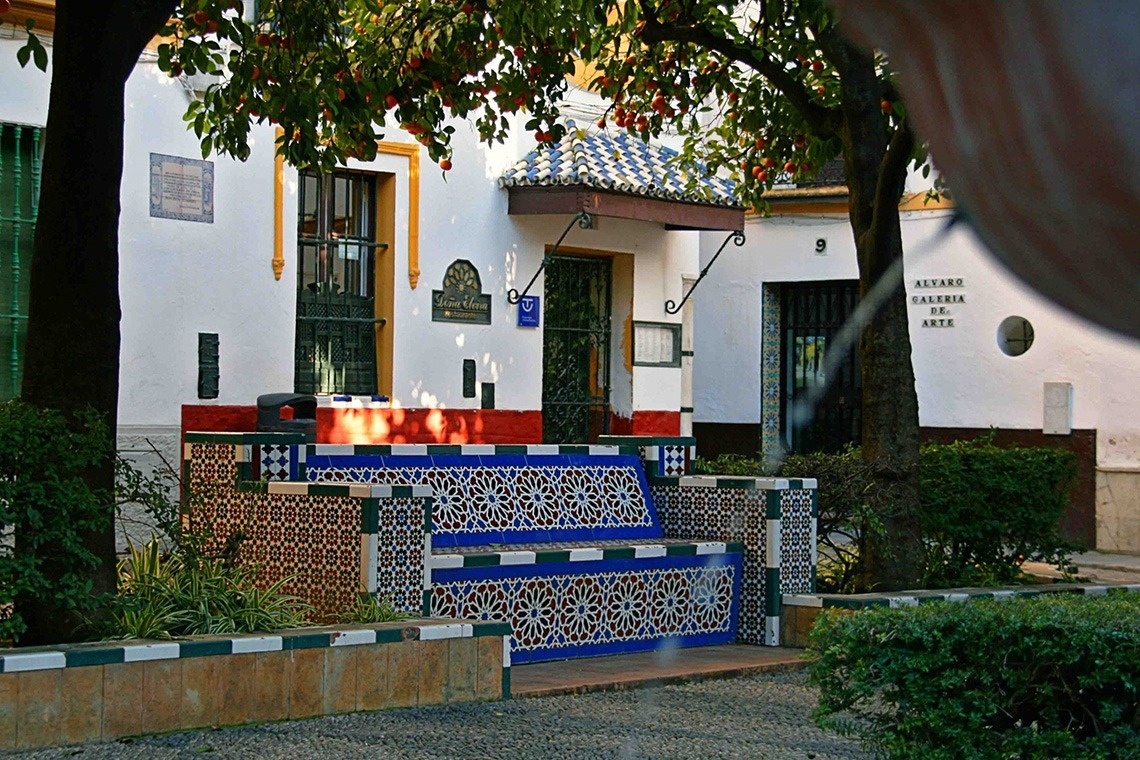
Santa Cruz neighborhood
The heart of the old town, with narrow streets and charming squares. Advantages: Proximity to the Cathedral, official procession route, authentic atmosphere. The area's boutique hotels offer prime views and direct access to the processions.
Triana
The most flamenco and traditional neighborhood in Seville, on the other side of the Guadalquivir River. Ideal for: Experiencing Holy Week from a local perspective, enjoying authentic tapas, and feeling the neighborhood's passion for its Virgin of Hope.
Historic Center (Alfalfa, Arenal)
Central location with excellent connectivity. Perfect for those who want to be close to everything: processions, restaurants, shops and main monuments.
Why Choose Sevilla Hotels Collection?
Our boutique hotels are strategically located in the most iconic neighborhoods:
- Sevilla Hotels Collection : We offer a unique experience with boutique hotels in prime locations.
Hotel Boutique Casas de Santa Cruz : Located in the heart of the Santa Cruz neighborhood, steps from the official itinerary.
Halo Boutique Hotel : Contemporary design in a central location.
Vida Boutique Apartments : Apartments with a full kitchen for greater flexibility.
4. Practical Tips for Experiencing Holy Week
Planning and Reservations
Book in advance: Hotels in Seville fill up months in advance. April and March are peak season.
Consult official itineraries: The Association of Brotherhoods publishes schedules and routes.
Estimated time: Each procession lasts between 8-12 hours. Please plan accordingly.
What to Bring
Comfortable shoes (you will be walking a lot on cobblestones)
Appropriate clothing (nights can be cool)
Water and snacks (few shops open during processions)
Camera or smartphone with a charged battery
Etiquette and Respect
Be silent when the step passes
Do not cross between the procession and the penitents
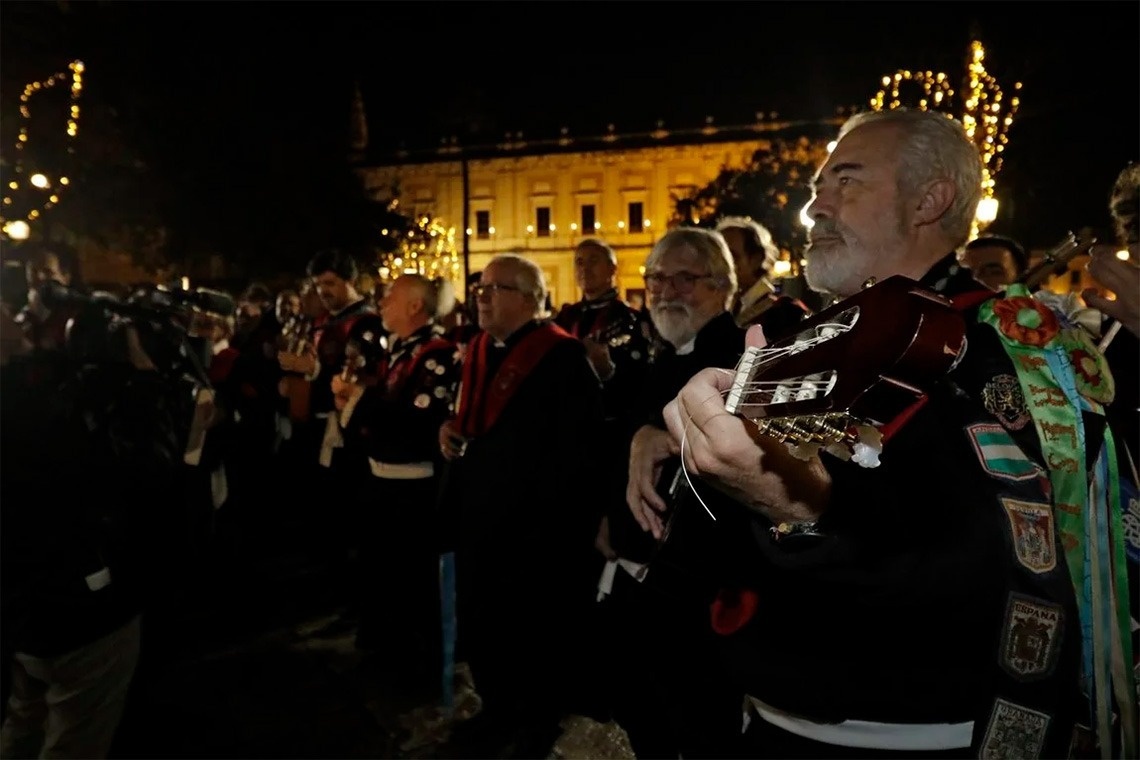
Respect the saetas (spontaneous flamenco songs)
Dress respectfully (avoid overly casual clothing)
Typical Dishes
Holy Week has its own gastronomy:
Torrijas: The star dessert, made with bread, milk, egg and cinnamon
Lenten stew: Chickpea stew with spinach and cod
Cod with tomato: Traditional for Good Friday
Pestiños and borrachuelos: Sweet fried pastries with honey
Fried doughnuts: They go perfectly with coffee or hot chocolate
Where to Eat
The bars in Triana, Alfalfa, and Arenal offer the best tapas. Recommendation: Try the tapas at El Rinconcillo (Seville's oldest bar, since 1670).
6. Beyond the Processions: What to Visit in Seville
Must-See Monuments
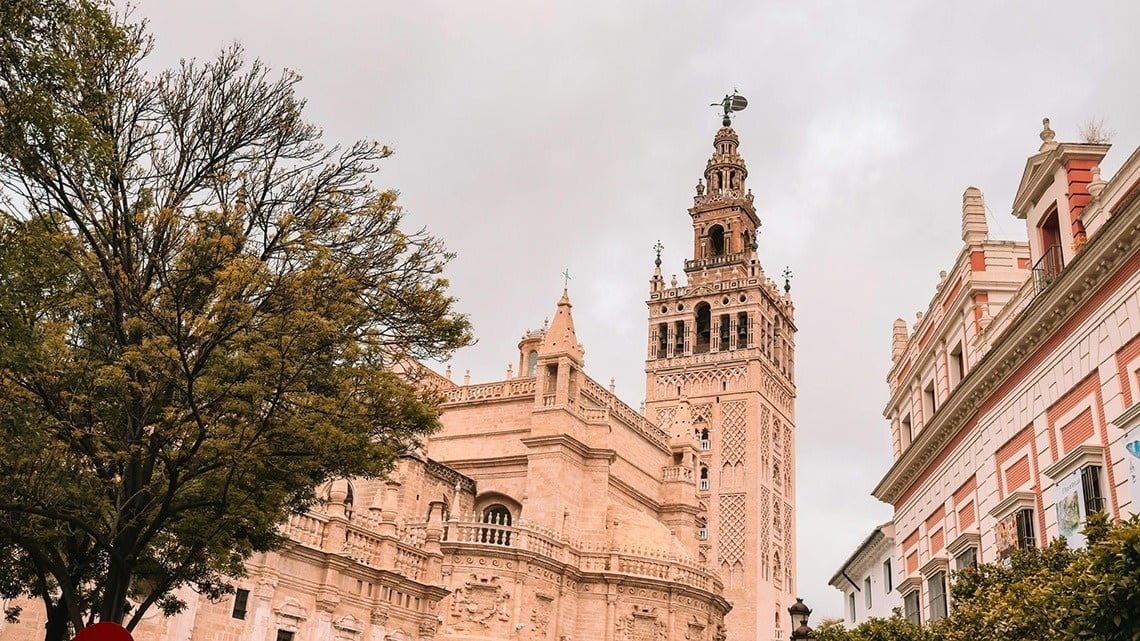
The Cathedral and the Giralda: World Heritage Site, the largest Gothic cathedral in the world
Royal Alcázar: Mudéjar palace with exotic gardens
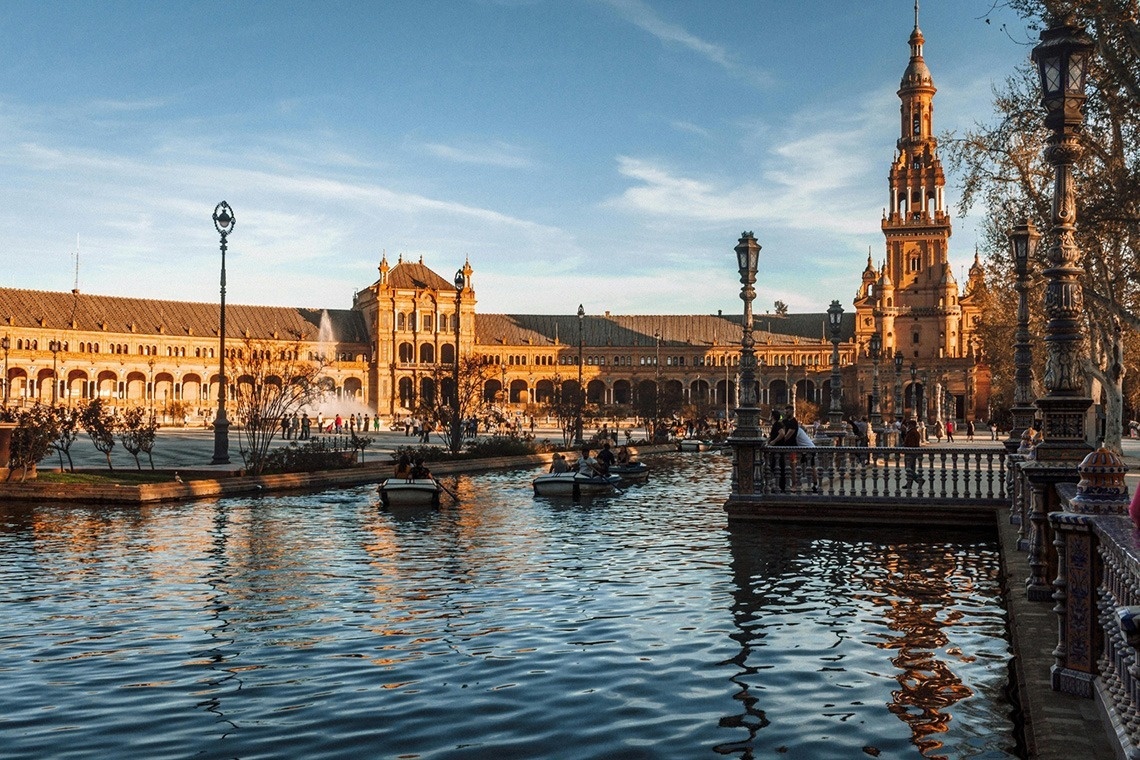
Plaza de España: Masterpiece of Andalusian regionalism
Maria Luisa Park: Ideal for resting between processions
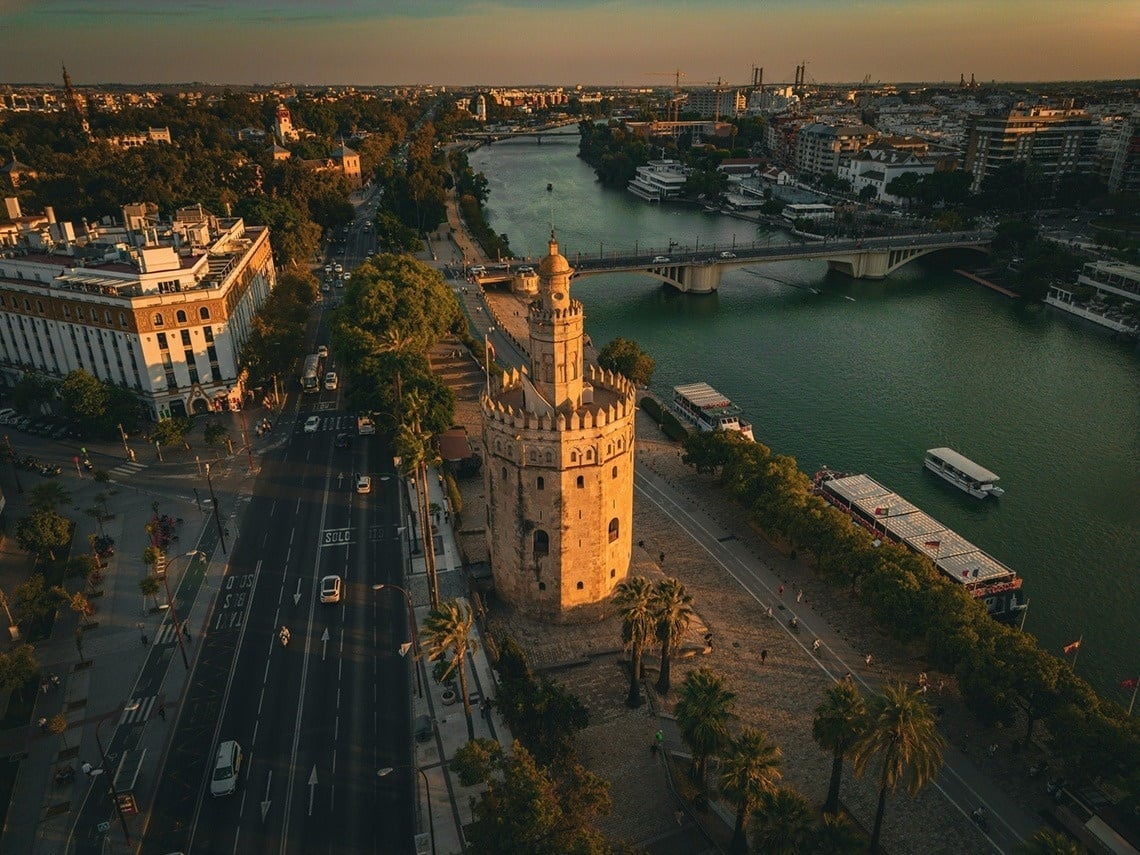
Torre del Oro: Old watchtower next to the Guadalquivir River
Unique Experiences
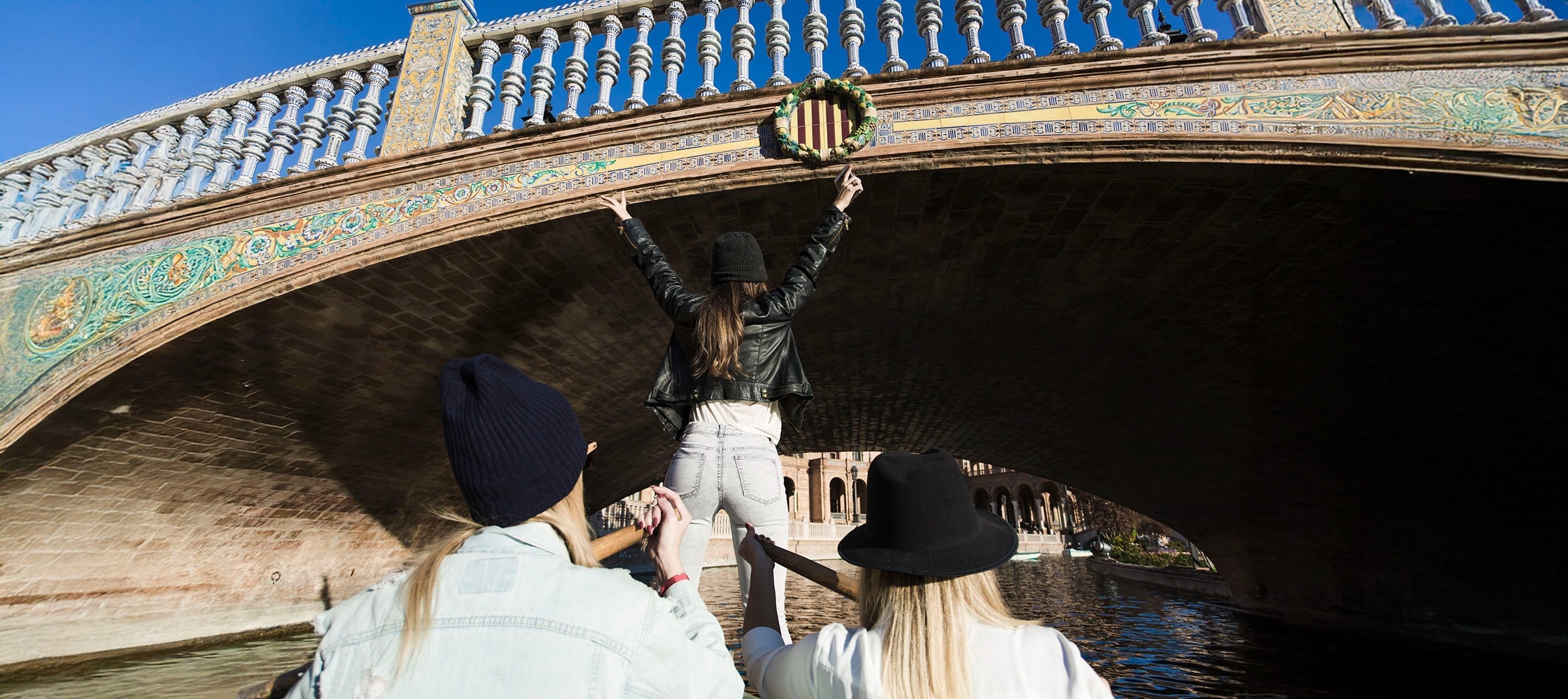
Boat trip on the Guadalquivir at sunset
Flamenco show in an authentic tablao
Visit the Metropol Parasol (Las Setas) in Seville for panoramic views
Tour of the brotherhoods' house-museums
How to get to Seville
By plane: Seville-San Pablo Airport (15 km from the city center). EA bus connects to the city center in 35 minutes.
Train: Santa Justa station with AVE connections from Madrid (2.5h), Barcelona (5.5h) and Malaga (2h)
By car: Well connected by A-4, A-49 and A-66 motorways. Note: Parking in the centre is difficult during Easter week.
Getting around Seville
On foot: The best option. The historic center is compact and pedestrian-friendly.
Subway: Line 1 connects main areas (does not operate 24 hours)
Bus: Extensive network but limited during processions
Taxi/VTC: Available but with higher fares and traffic disruptions
Bicycle: Sevici (public bicycles) is an option outside of procession times
Climate in March-April
Temperatures between 12°C (nights) and 22°C (days). Chance of rain. Bring layers of clothing and a compact umbrella.
Paso: Platform with religious images carried by the bearers
Costalero: Person who carries the float under the platform
Nazarene: Penitent wearing a tunic and pointed hood who accompanies the procession
Capirote: Pointed, conical hood
Brotherhood/Confraternity: Religious organization that organizes each procession
Saeta: A devotional flamenco song sung spontaneously
Madrugá: Night of Holy Thursday to Good Friday, culminating moment
Palio: Embroidered canopy that covers some images of the Virgin Mary
Official itinerary: Common route through the historic center
When is Holy Week 2026 in Seville?
From March 29 to April 5, 2026.
Which is the best procession to watch?
La Macarena, El Gran Poder, and La Esperanza de Triana are the most emblematic. However, each brotherhood has its own unique charm.
Is there an entrance fee?
No. The processions are free and can be viewed from the street. You only pay for chairs or stands along the official route.
Where can I reserve seats to watch the processions?
At the Seville City Hall or through specialized companies. Book months in advance.
Can children attend?
Yes, it's a family experience. Bring snacks, water, and be prepared for long waits.
What to do if it rains?
The processions may be cancelled due to heavy rain. Check the brotherhoods' social media for real-time updates.
Are shops open during Easter week?
Most are closed on Maundy Thursday afternoon, Good Friday, and possibly Holy Saturday. Plan your shopping accordingly.
Holy Week in Seville 2026 will be an unforgettable experience. The combination of tradition, art, religion, and emotion creates an atmosphere unlike any other in the world.
Don't wait any longer: Sevilla Hotels Collection's boutique hotels offer the perfect location, comfort, and personalized service for an unforgettable Holy Week experience. Book in advance and ensure you have the best accommodation in the heart of Seville's Holy Week.
Book your stay at Sevilla Hotels Collection now